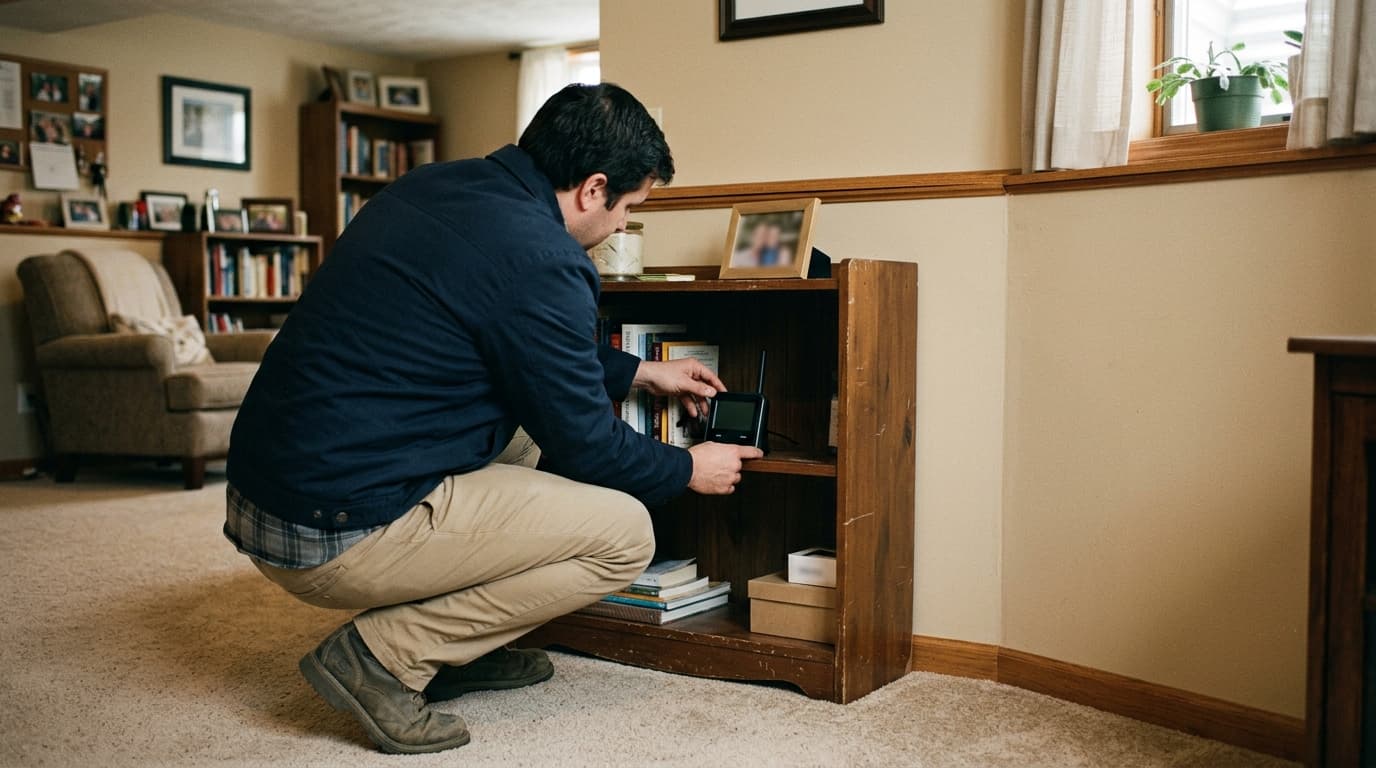
Rockford, Illinois
Radon Testing in Rockford You Can Actually Understand
Updated
Radon testing in Rockford starts with a number: more than 1 in 3 Winnebago County homes test at or above the EPA's action level. Get a straight answer, in plain language, with a fixed price before anything is scheduled, and a clear path into radon mitigation if the result comes back high.
- Fast, plain-language results
- Fixed price before scheduling
- EPA action-level standard
The short answer
What Radon Testing and Mitigation Cost Here
Radon testing in the Rockford area runs $150 to $300, depending on short-term vs. long-term monitoring. If a result comes back high, a full mitigation system generally runs $800 to $2,000, and replacing just a failed fan on an existing system runs about $200 to $600nationally, averaging around $350 (Angi, updated 2026-03-18). Winnebago, Boone, and Ogle Counties all sit in the EPA's Radon Zone 1, its highest-potential category, and more than 1 in 3 Winnebago County homes (36.7% in state IEMA data) test at or above the EPA's 4.0 pCi/L action level.
Buying or selling a home
Testing From Someone Who Also Works the Transaction
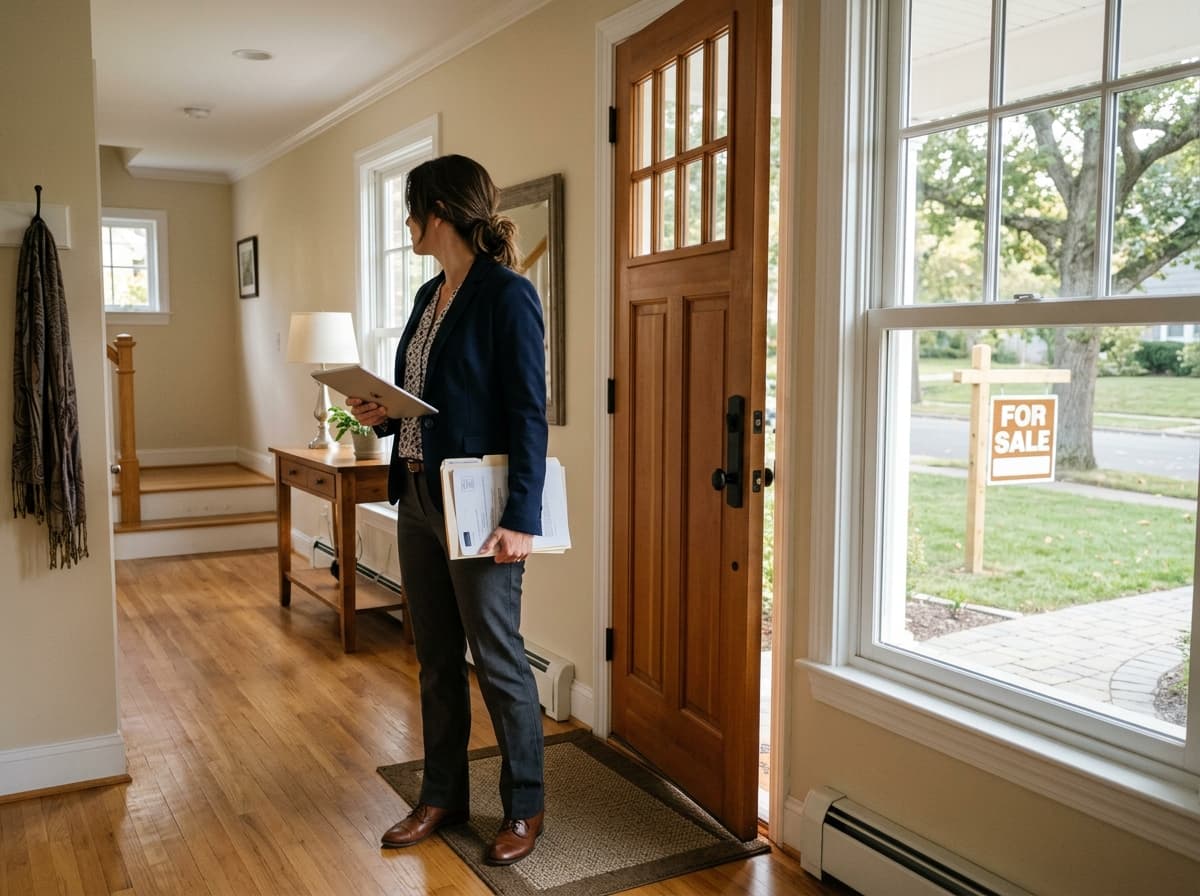
Most radon companies never see the real estate side of what a high result means for a deal in progress. Testing scheduled around your actual closing timeline, from someone who understands what a lender will and won't accept, and what a closing contingency can actually absorb on a deadline.
A short-term test is the standard choice here because most closings don't have 90 days of slack; testing typically happens during the inspection contingency period, with enough runway to get a result back and still negotiate before the deadline arrives. Illinois doesn't legally require radon testing before a sale, but under the Illinois Radon Awareness Act a seller who already has a known result generally has to disclose it, which is part of why testing ahead of listing has become common practice: it puts a seller in control of a number instead of a buyer's inspector surprising them with one mid-negotiation.
Every way we help
Everything We Help With
One real section per service, not a list of buzzwords: what it is, what it costs, and where to go for the full detail.
Radon testing
Radon testing for homes in Rockford and towns across Winnebago, Boone, and Ogle County. A test placed in your lowest lived-in level tells you whether your home has a real radon problem, with results read against the EPA's action level.
Winnebago County sits inside an EPA high-radon zone, and the number that keeps surprising people is a local one: more than 1 in 3 homes here (36.7% in state IEMA data) test at or above the EPA action level. It is not a rare problem in this area, it is closer to a coin flip.
- Short-term testing (charcoal canister or alpha-track, several days)
- Long-term testing (alpha-track or continuous monitor, 90+ days)
- Placement in the lowest lived-in level of the home
- Results read against the EPA action level of 4.0 pCi/L
Typical price: $150–$300
Radon mitigation
What happens after a test comes back high: understanding the mitigation system that fixes it, what it costs, and confirmation testing once it's installed. Illinois law requires anyone who performs radon mitigation to hold an IEMA license, the same as testing.
A test confirms whether mitigation is worth doing and a follow-up test confirms whether it actually worked. That second number is the one that matters, and skipping it is the most common way a mitigation job goes unverified.
- Explaining what a confirmed high result means and whether mitigation is worth pursuing
- Walking through how an active soil depressurization system works for your foundation type
- Realistic Rockford-area cost ranges before any installer is contacted
- Confirmation testing once a system is installed, to verify it actually brought levels down
Typical price: $800–$2,000 full system, $200–$600 fan only
Buying or selling a home
Radon testing timed to a real estate closing, from someone who works both sides of that transaction. Testing scheduled around inspection periods and closing dates, with results explained in plain language for buyers, sellers, and agents.
This is where a realtor's-eye view actually matters: knowing what a closing timeline can and can't absorb, and how to explain a number to someone who is already stressed about a deadline.
- Short-term testing scheduled to fit inspection period deadlines
- Results explained for buyers, sellers, or agents
- Guidance on negotiating mitigation costs into a sale
- Illinois radon disclosure context for sellers
Typical price: $150–$300, short-term, scheduled around closing
New construction
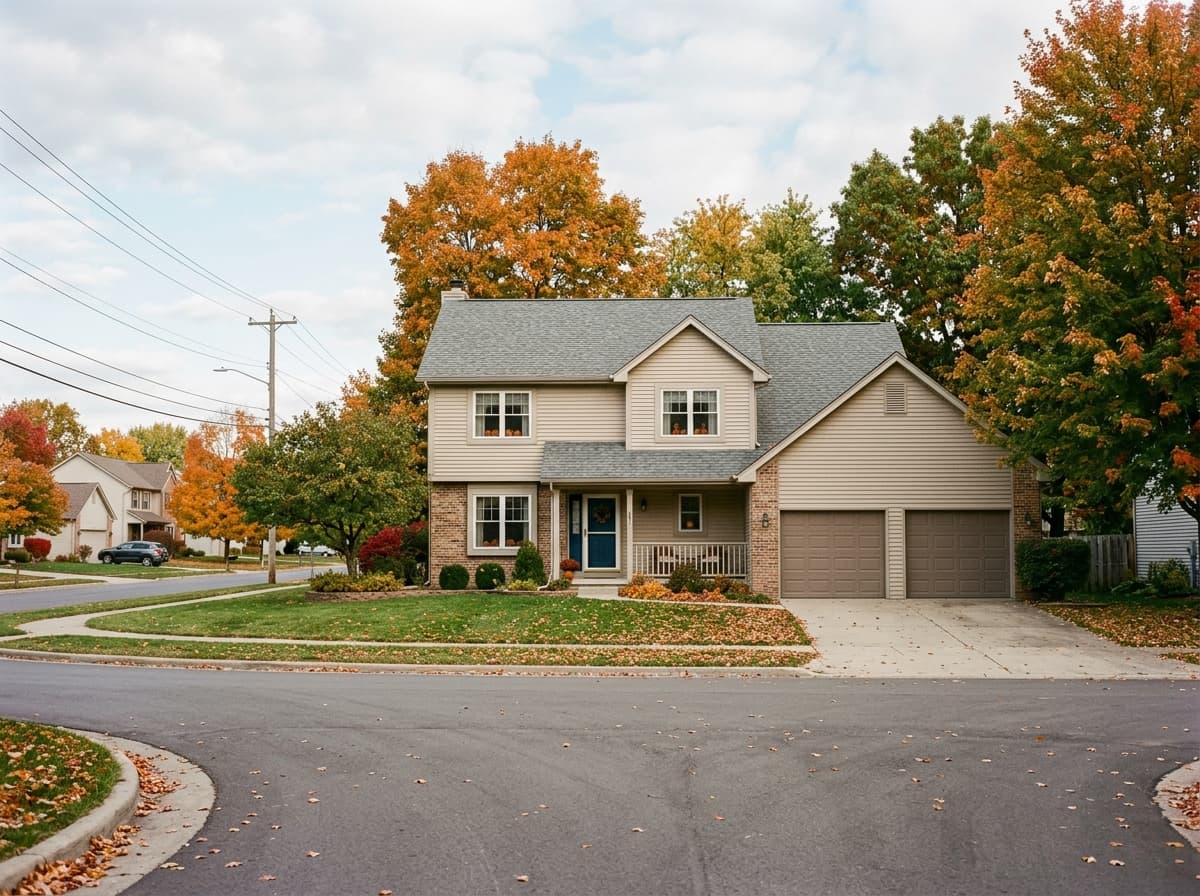
Radon testing for newly built homes in the Rockford area. New construction is not automatically low-radon, and testing after the home is finished and closed up confirms whether radon-resistant construction techniques actually worked.
A passive system that isn't working is invisible without a test. The pipe is there, the gas isn't necessarily being pulled out effectively, and the only way to know is to check.
- Testing after the home is fully enclosed and closed up
- Confirmation of whether passive radon-resistant construction is working
- Guidance on activating a passive system with a fan if levels are borderline
- Same short-term or long-term testing options as an existing home
Typical price: $150–$300
What is radon, briefly
A Gas You Can't See, Smell, or Taste
Radon is a colorless, odorless, radioactive gas produced by uranium decaying in soil. It's the second leading cause of lung cancer in the United States after smoking, responsible for an estimated 21,000 deaths a year, and it comes from the ground a house sits on, not from the house's age or condition.
As a gas, it moves upward through the soil and can seep into a house through cracks in the foundation, gaps around pipes, sump pits, and other openings where the house meets the ground beneath it. Once inside, it can build up, especially in a basement or lowest livable level with limited air exchange, which is exactly why a test placed there and nowhere else gives the result that actually matters.
What it costs
A Fixed Price, Confirmed Upfront
The price for the test itself doesn't change based on what the result turns out to be. A high reading isn't a bigger bill for the testing service; mitigation, if it's needed at all, is a separate job with its own price, quoted only after a confirmed high result and the foundation type is assessed. Nothing gets scheduled until you have a real number, not a range.
| Job | Typical price | Source |
|---|---|---|
| Radon testing (short or long-term) | $150–$300 | Regional market data, 2026-09-01 |
| Radon mitigation system (installed) | $800–$2,000 | Regional market data, 2026-09-01 |
| Mitigation fan replacement only | $200–$600 | Angi, national, 2026-03-18 |
Testing price depends on short-term vs. long-term monitoring. Mitigation system cost depends on foundation type and house size. Get a firm number before anything is scheduled.
What testing looks like
How Testing Works
Four steps, no surprises: a device goes in, it does its job undisturbed, and you get a real number explained in language that actually means something, not just a printout.
- Step 1
Book
Tell us the town, why you're testing, and any deadline you're working against, so the right method gets scheduled the first time.
- Step 2
Placed
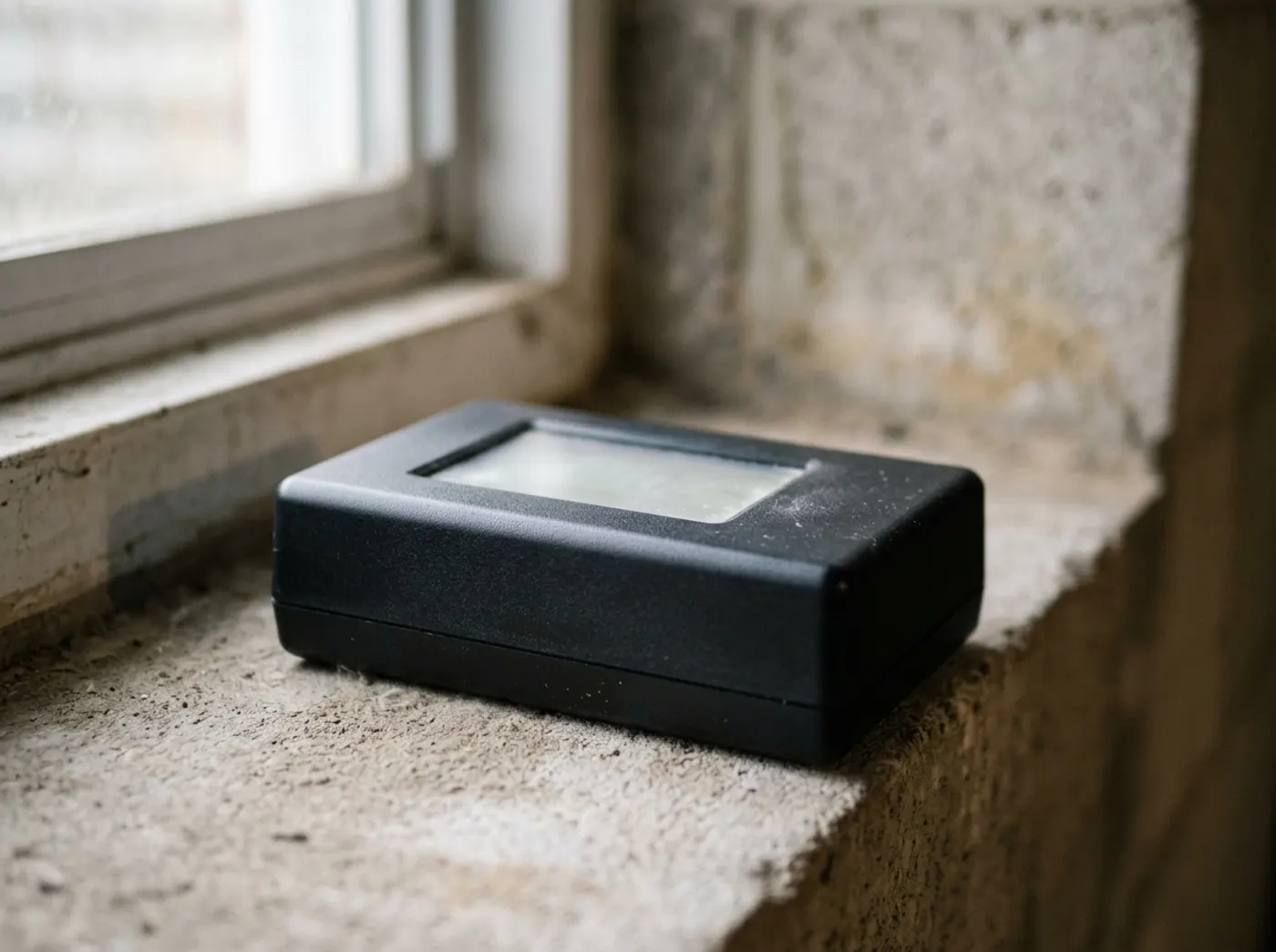
A test device goes in the lowest livable level of the home, left undisturbed for the test period. No disruption to daily life while it works.
- Step 3
Read
The device is retrieved or read once the period ends: short-term in a few days to a week, long-term after 90 days or more.
- Step 4
Explained
Your number, explained in plain language against the EPA's 4.0 pCi/L action level, with clear next steps if it comes back high.
Illinois law
Illinois Radon Rules That Actually Apply
Who's allowed to test or mitigate
The Radon Industry Licensing Act (420 ILCS 44/) requires anyone performing radon measurement or mitigation in Illinois to hold an IEMA license, earned through an approved course, a state exam, documented experience, and liability insurance, with continuing education required to renew it. IEMA publishes a free public lookup to verify a specific tester or contractor's license before hiring them, and it's worth the couple of minutes it takes.
IEMA Radon Licensing PortalWhat a seller has to disclose
Illinois doesn't legally require testing before a home sale, but the Radon Awareness Act (420 ILCS 46/) requires a seller to disclose a radon result they already know about, and most sellers' disclosure forms carry an IEMA-approved radon pamphlet. Many buyers, lenders, and agents request a test anyway even though it isn't mandatory, and a buyer can request their own independent test even if the seller already has a result on file.
420 ILCS 46/, Illinois Radon Awareness ActWhat new construction has to include
Since 2013, the Radon Resistant Construction Act (420 ILCS 52/) has required new single-family homes and dwellings with two or fewer units to include passive radon-resistant construction: vent piping built in during the build, relying on natural airflow, with no fan yet. Testing after the home is enclosed is the only way to know if the passive system alone keeps levels below the EPA's action level, or whether it needs a fan added to become an active system.
420 ILCS 52/, Radon Resistant Construction ActWorking against a closing date?
Short-term testing can fit most inspection-period timelines. The sooner it's scheduled, the more room there is to act on the result.
Service area
Rockford, Winnebago, Boone & Ogle County
Every town below has its own page built from real IEMA radon test records and Census housing data, not a find-and-replace description. If you're just outside the towns listed, ask anyway; the service area is about the drive, not a hard boundary.
Keep reading
Radon Questions, Answered and Sourced
Six guides on testing types, Illinois law, licensing, and cost, each cited to a named source. Including whether a DIY test kit is good enough, or when professional testing is the practical choice.
Short-Term vs. Long-Term Radon Testing: Which One Do You Need?
Is Radon Testing Required to Sell a Home in Illinois?
Radon Fan Replacement Cost: What to Expect
How to Verify a Radon Tester's Illinois License
Does Illinois Require Radon-Resistant New Construction?
DIY Radon Test Kit vs. Professional Testing: What's the Difference?
Common questions
Radon Testing and Radon Mitigation, Explained
What areas do you cover?
Rockford, Loves Park, Machesney Park, Roscoe, Rockton, Belvidere, and the smaller towns across Winnebago, Boone, and the northern part of Ogle County. If you're just outside those, ask anyway.
How much is radon testing?
Testing typically runs $150 to $300, depending on short-term vs. long-term monitoring. Testing price depends on short-term vs. long-term monitoring. Mitigation system cost depends on foundation type and house size. Get a firm number before anything is scheduled. See the full cost breakdown.
How much does a radon test cost in Illinois?
Statewide, radon testing commonly runs in the same range as the Rockford area, roughly $150 to $300 for a professional test, though exact pricing varies by company and by short-term vs. long-term method. Full pricing details here.
What houses are more likely to have radon?
None, specifically. Radon comes from uranium decaying in the soil a house sits on, not from the house's age, construction type, or whether it has a basement. A brand-new home and a 100-year-old home on the same lot carry the same underlying risk, and a neighbor's low result says nothing about yours.
How often do homes test above the action level here?
More than 1 in 3 homes in Winnebago County (36.7% in state IEMA data) test at or above the EPA's 4.0 pCi/L action level. Winnebago, Boone, and Ogle Counties all sit in the EPA's Radon Zone 1, its highest-potential category.
Is a radon level of 1.3 pCi/L considered high?
No. The EPA's action level is 4.0 pCi/L, with 2 to 4.0 pCi/L worth considering action on. A 1.3 pCi/L result sits below both thresholds. There is no level the EPA calls completely risk-free, but 1.3 pCi/L is not in the range where mitigation is typically recommended.
Is it worth doing a radon test?
Yes. Radon is the second leading cause of lung cancer in the United States after smoking, the EPA attributes roughly 21,000 lung cancer deaths a year to it, and testing is the only way to know a specific home's level. In a county where more than 1 in 3 homes test high, skipping it means guessing.
What happens during a radon inspection?
A test device (short-term or long-term) is placed in the lowest livable level of the home and left undisturbed for the testing period. There's no invasive inspection of the structure itself; it's a measurement of the air, read against the EPA's 4.0 pCi/L action level once the period ends.
Is radon testing required to sell a home in Illinois?
Illinois law doesn't require it, but many buyers, lenders, and agents request one, and under the Illinois Radon Awareness Act a seller must disclose a result they already know about.
Ready to know your number?
Tell us why you're testing and any deadline you're working against. You get a fixed price and a straight answer back.