Rockford, Illinois
Radon Testing in Rockford, IL
Radon testing for homes in Rockford and towns across Winnebago, Boone, and Ogle County. A test placed in your lowest lived-in level tells you whether your home has a real radon problem, with results read against the EPA's action level.
Radon testing measures the concentration of radon gas in a home, reported in picocuries per liter (pCi/L). The EPA recommends taking action at 4.0 pCi/L or higher and considering it between 2 and 4.0 pCi/L. Testing runs from a few days (short-term) to several months (long-term), placed in the lowest livable area of the home.
Winnebago County sits inside an EPA high-radon zone, and the number that keeps surprising people is a local one: more than 1 in 3 homes here (36.7% in state IEMA data) test at or above the EPA action level. It is not a rare problem in this area, it is closer to a coin flip.
What's included
- Short-term testing (charcoal canister or alpha-track, several days)
- Long-term testing (alpha-track or continuous monitor, 90+ days)
- Placement in the lowest lived-in level of the home
- Results read against the EPA action level of 4.0 pCi/L
- Plain-language explanation of what the number means
- Guidance on next steps if a result comes back high
Why radon is worth testing for
Radon is a colorless, odorless, radioactive gas that seeps up from the ground through cracks and gaps in a foundation. It is the second leading cause of lung cancer in the United States after smoking, and the EPA attributes roughly 21,000 lung cancer deaths a year to radon exposure. There is no safe level, only an action level.
Short-term vs. long-term testing
A short-term test (2 to 90 days, most commonly a few days to a week) gives a fast read and is the standard for real estate transactions on a deadline. A long-term test (90 days to a year) accounts for seasonal swings in radon levels and gives a more accurate picture of year-round exposure. Which one makes sense depends on why you are testing.
Winnebago County specifics
This area's radon risk comes from the geology underneath it, not from anything about a specific house's age or condition. New and old homes alike can test high, and a neighbor's low result does not tell you anything about your own house. The only way to know is to test.
Common questions
Before you book
How long does a radon test take?
A short-term test runs a few days to about a week, placed in the lowest livable level of the home and left undisturbed for the full period. A long-term test runs 90 days or more for a more complete picture.
Where does the test get placed?
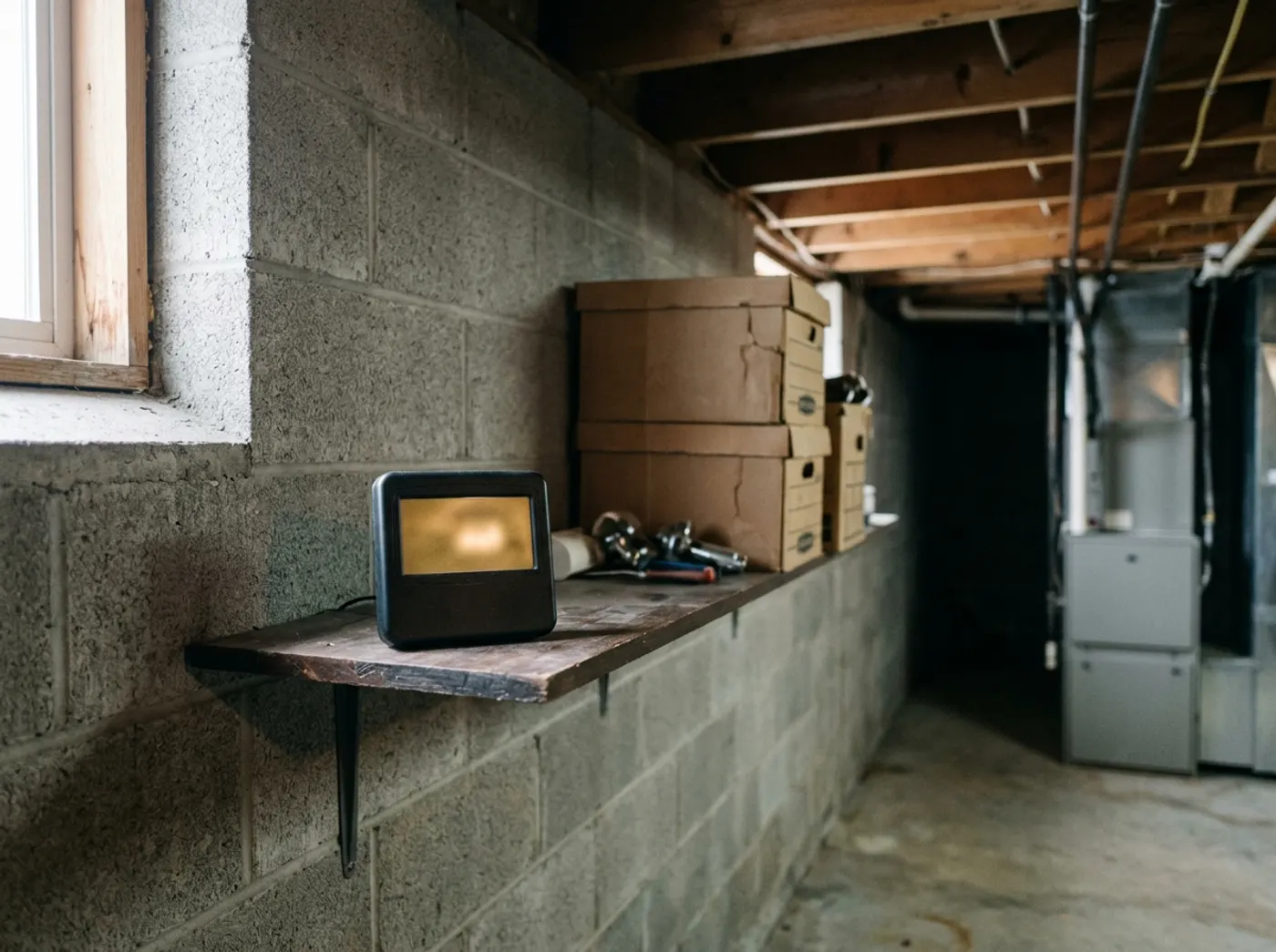
Testing happens in the lowest level of the home someone actually spends time in, typically a basement or ground floor. Unfinished crawl spaces and unused areas are not representative of what occupants breathe.
What happens if the result comes back high?
A confirmed result at or above the EPA's 4.0 pCi/L action level means a mitigation system is worth pursuing. That is a separate service from testing, and coordinating it is part of what happens after a high result.
Does a new home need to be tested too?
New construction is not automatically radon-free. Radon comes from the ground the house sits on, not the age of the building, so a brand-new home in this area carries the same testing case as an older one.
Where this is done
Radon testing Across the Area
Radon testing across Winnebago, Boone and Ogle County. Each town page has its own local notes; the full list is on the service area page.
Related
Other Ways We Can Help
Radon mitigation
What happens after a test comes back high: understanding the mitigation system that fixes it, what it costs, and confirmation testing once it's installed. Illinois law requires anyone who performs radon mitigation to hold an IEMA license, the same as testing.
Buying or selling a home
Radon testing timed to a real estate closing, from someone who works both sides of that transaction. Testing scheduled around inspection periods and closing dates, with results explained in plain language for buyers, sellers, and agents.
New construction
Radon testing for newly built homes in the Rockford area. New construction is not automatically low-radon, and testing after the home is finished and closed up confirms whether radon-resistant construction techniques actually worked.
Ready to know your number?
Tell us why you're testing and any deadline you're working against. You get a fixed price and a straight answer back.