Rockford, Illinois
Radon Mitigation in Rockford, IL
What happens after a test comes back high: understanding the mitigation system that fixes it, what it costs, and confirmation testing once it's installed. Illinois law requires anyone who performs radon mitigation to hold an IEMA license, the same as testing.
Radon mitigation is the process of reducing indoor radon levels, most often with an active soil depressurization system: a vent pipe and fan that pull radon from beneath the foundation and release it above the roofline, away from windows and doors. A correctly installed system can cut indoor radon levels by up to 99%. In the Rockford area, a mitigation system generally runs $800 to $2,000 depending on the foundation type and house size, and a replacement fan alone runs $200 to $600 (Angi, 2026).
A test confirms whether mitigation is worth doing and a follow-up test confirms whether it actually worked. That second number is the one that matters, and skipping it is the most common way a mitigation job goes unverified.
What's included
- Explaining what a confirmed high result means and whether mitigation is worth pursuing
- Walking through how an active soil depressurization system works for your foundation type
- Realistic Rockford-area cost ranges before any installer is contacted
- Confirmation testing once a system is installed, to verify it actually brought levels down
- Guidance on fan replacement if an existing system's fan has failed or is aging out
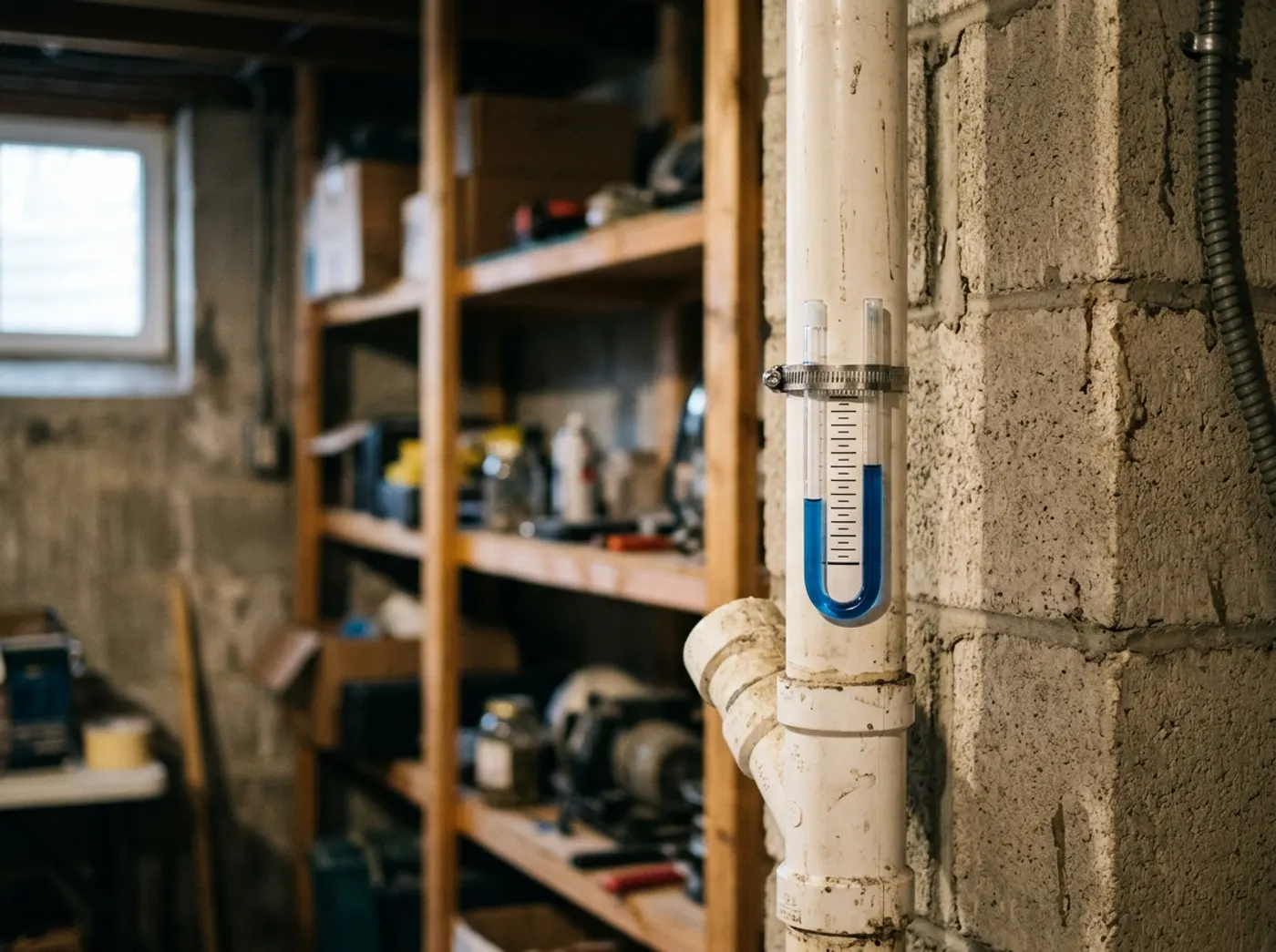
How a mitigation system actually works
Most Illinois homes with elevated radon use active soil depressurization: a sealed vent pipe run from beneath the slab or crawl space, up through the house (or along an exterior wall), with an in-line fan that continuously pulls soil gas out and vents it above the roofline. It's a mechanical, ongoing system, not a one-time fix, which is why the fan's condition matters years after installation.
Who installs it, and why the license matters
Illinois's Radon Industry Licensing Act (420 ILCS 44/) requires anyone who performs radon mitigation or measurement in the state to hold an IEMA license. Before hiring anyone for mitigation work, it's worth checking their license on IEMA's own public lookup rather than taking a company's word for it.
Why confirmation testing is the step people skip
A mitigation system that is running is not the same as one that is working. The only way to know a system actually brought levels below the EPA's 4.0 pCi/L action level is a confirmation test placed after installation, with the system operating normally. Skipping this step means paying for a system without proof it fixed the problem.
When a fan, not the whole system, is the issue
Mitigation fans are mechanical and don't last indefinitely; a failed or weakening fan can let radon levels creep back up in a system that was working fine when installed. Signs include an unusually quiet or silent fan, a U-tube manometer reading that's changed, or a retest coming back higher than the original post-mitigation number. Replacing a fan alone is a smaller job than a full system, and testing afterward confirms the fix worked.
Common questions
Before you book
How do I know if I need radon mitigation?
A confirmed test result at or above the EPA's 4.0 pCi/L action level is the standard trigger. Between 2 and 4.0 pCi/L, the EPA says it's worth considering; below that, risk still exists but mitigation is less commonly pursued.
How much does radon mitigation cost in the Rockford area?
Generally $800 to $2,000 depending on the foundation type (slab, crawl space, or basement) and house size, based on regional market data gathered 2026-09-01. Get a firm number from a licensed installer before anything is scheduled.
Does mitigation actually work?
A correctly installed and maintained active soil depressurization system can reduce indoor radon levels by up to 99%, per EPA guidance. The only way to confirm it worked for your specific house is a test placed after installation.
Is the installer required to be licensed in Illinois?
Yes. The Radon Industry Licensing Act (420 ILCS 44/) requires an IEMA license to perform radon mitigation or measurement anywhere in Illinois. IEMA publishes a free lookup to verify a specific contractor's license.
What if my mitigation system was installed years ago and I'm not sure it's still working?
Fans wear out. A retest is the only way to know a years-old system is still holding levels down, and it's a much smaller step than assuming the worst or replacing the whole system unnecessarily.
Related
Other Ways We Can Help
Radon testing
Radon testing for homes in Rockford and towns across Winnebago, Boone, and Ogle County. A test placed in your lowest lived-in level tells you whether your home has a real radon problem, with results read against the EPA's action level.
Buying or selling a home
Radon testing timed to a real estate closing, from someone who works both sides of that transaction. Testing scheduled around inspection periods and closing dates, with results explained in plain language for buyers, sellers, and agents.
New construction
Radon testing for newly built homes in the Rockford area. New construction is not automatically low-radon, and testing after the home is finished and closed up confirms whether radon-resistant construction techniques actually worked.
Ready to know your number?
Tell us why you're testing and any deadline you're working against. You get a fixed price and a straight answer back.